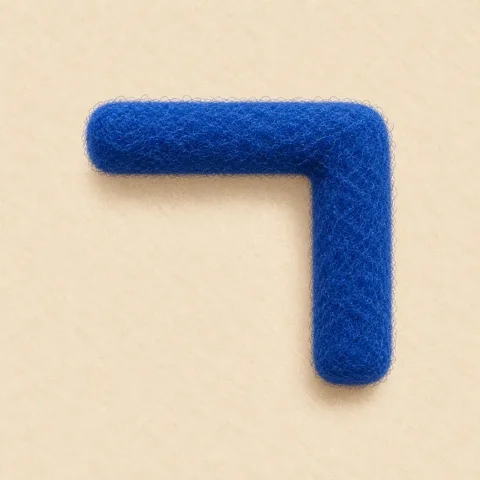
g/k
ㄱ
giyeok
Every word comes with a picture, its reading and audio.
g/k
ㄱ
giyeok

water
물
mul

rice
밥
bap

train station
기차역
gichayeok
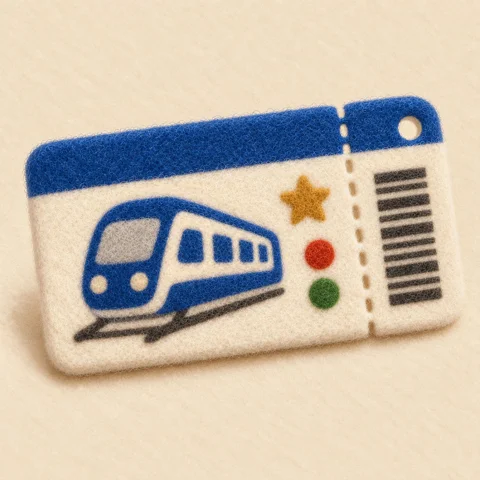
ticket
표
pyo

flower
꽃
kkot

to eat
먹다
meokda

thank you
감사합니다
gamsahamnida
Hangul has 24 basic letters: 14 consonants and 10 vowels. The deck has 40 cards, with the double consonants and compound vowels too.
물, with mul next to it. When you type an answer, the reading only appears afterwards.
Numbers are labeled by system, Sino-Korean or Native Korean, and goodbye comes in two forms: to someone leaving and to someone staying.
The US Foreign Service Institute plans 88 weeks of full-time study for Korean. With 10 new cards a day, your first pass through the decks takes about five weeks.
Want a full plan? Read our guide: How to Learn Vocabulary Fast: A Practical Guide
Sources: Hangul, US Foreign Service Institute, TOPIK.
New Hangul words fade fast unless you see them again at the right moment. Peek does the timing for you.
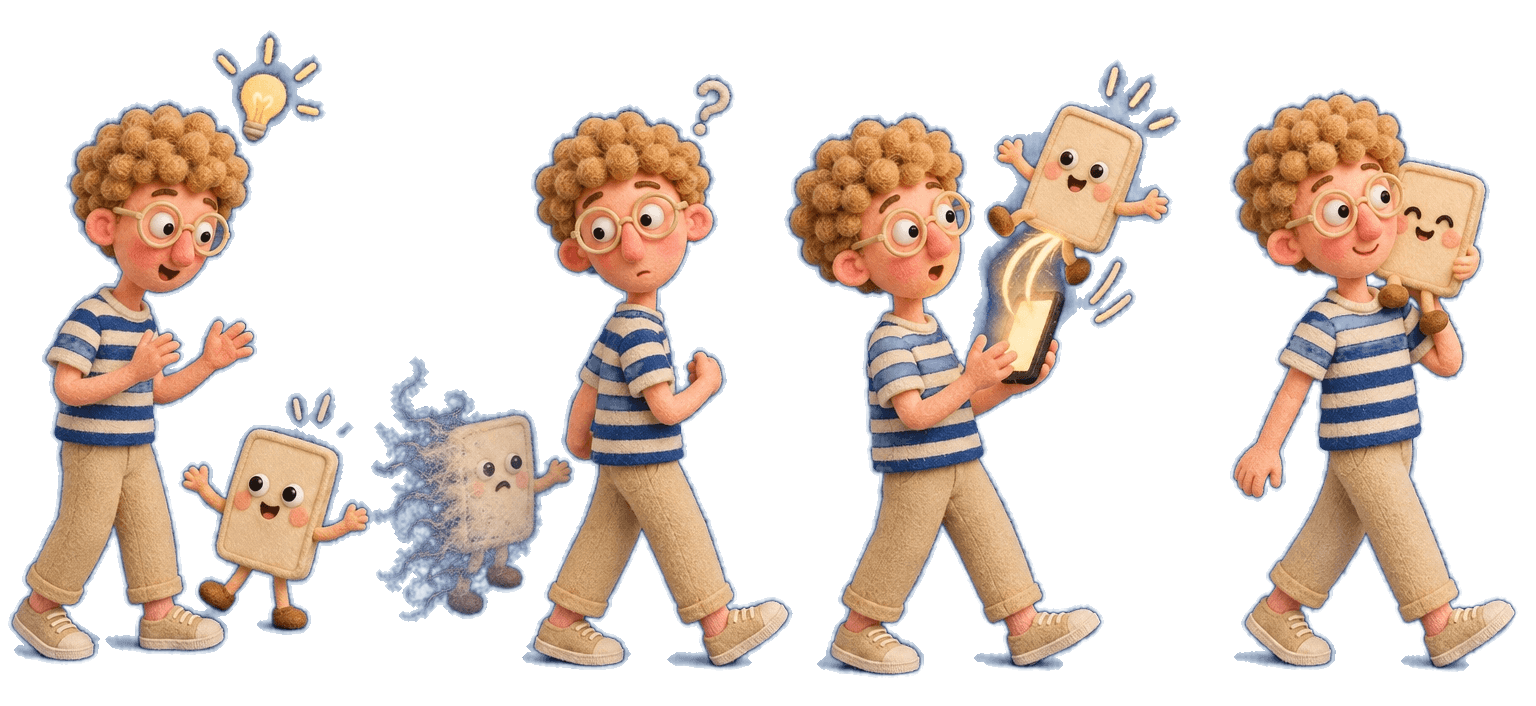
Learn Today
You meet 물, the word for water. It clicks.
Fade Tomorrow
A day later, you can read the letters but the meaning is gone.
Review Tomorrow
Peek puts 물 in front of you again just in time.
Keep A month later
A few reviews later, you see 물 and think of water at once.
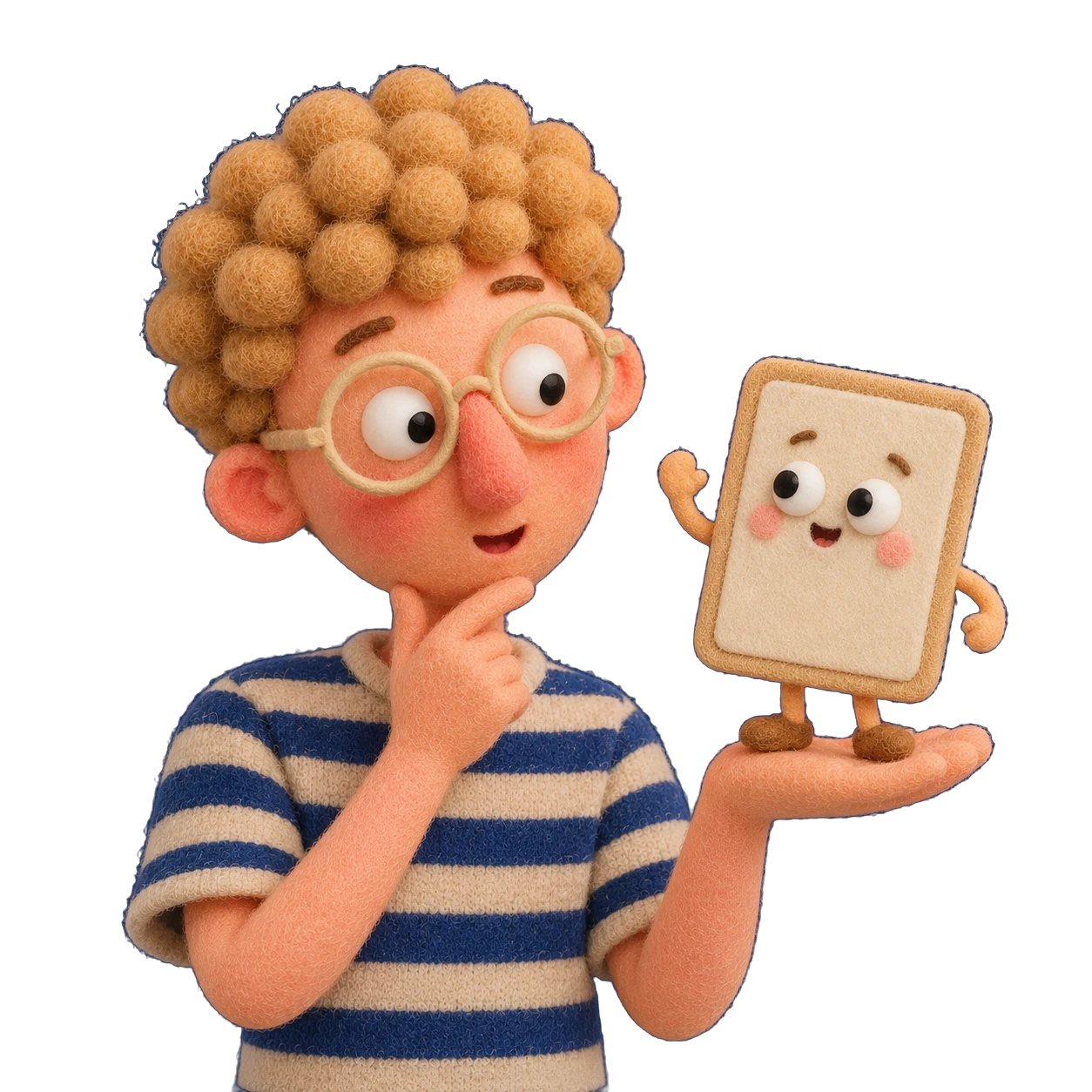
Learn Today
You meet 물, the word for water. It clicks.

Fade Tomorrow
A day later, you can read the letters but the meaning is gone.
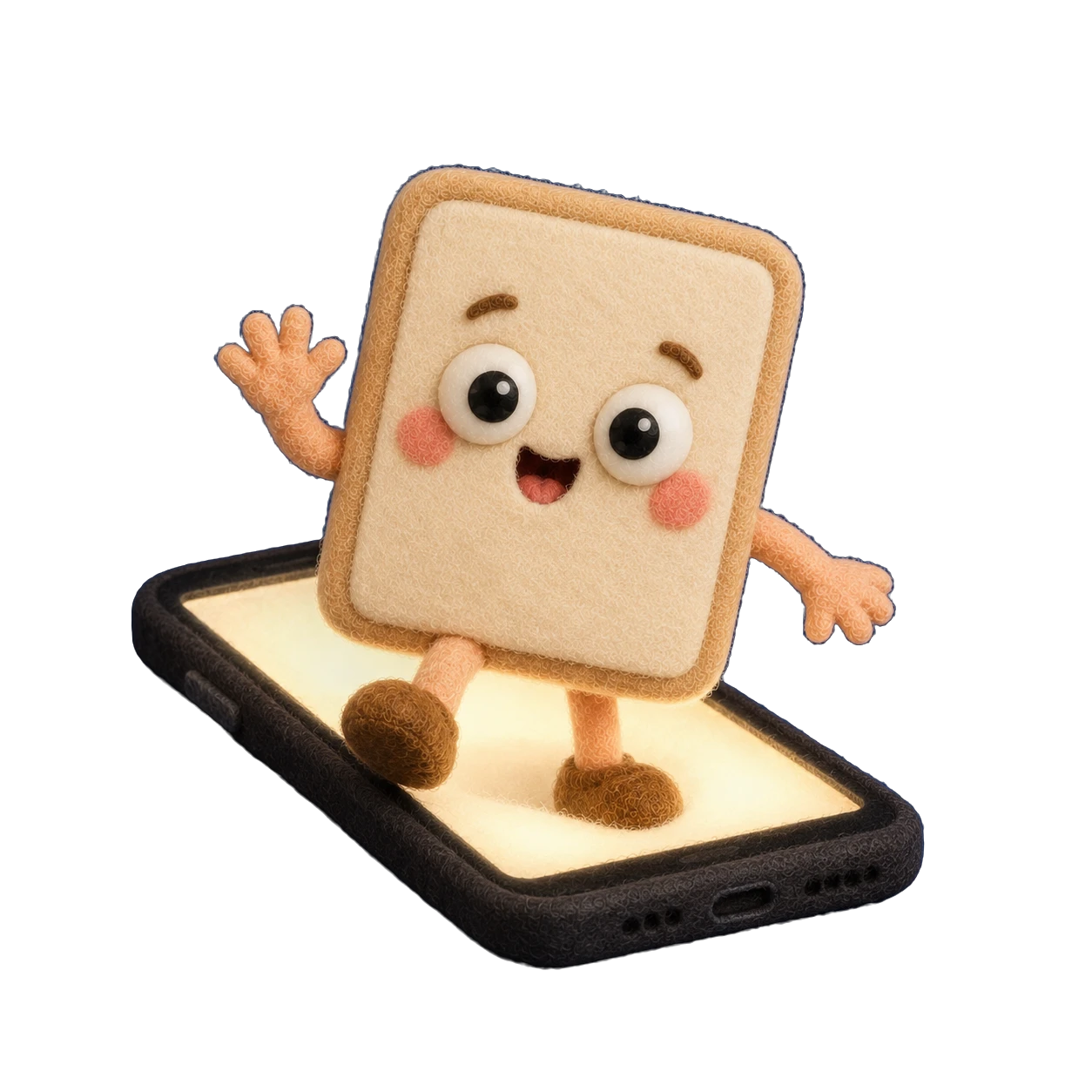
Review Tomorrow
Peek puts 물 in front of you again just in time.

Keep A month later
A few reviews later, you see 물 and think of water at once.
Based on the forgetting curve (Ebbinghaus, 1885). Learn more on Wikipedia →

Going to Korea? Subway, food, shopping: the words you'll meet on day one.

Preparing for TOPIK, levels 1 to 6? The decks give you a base. Pair them with your textbook, and add its words as your own cards.

Working with Korean colleagues? The first deck marks the formal greeting, so you can start politely.
Tap a step to see the screen.
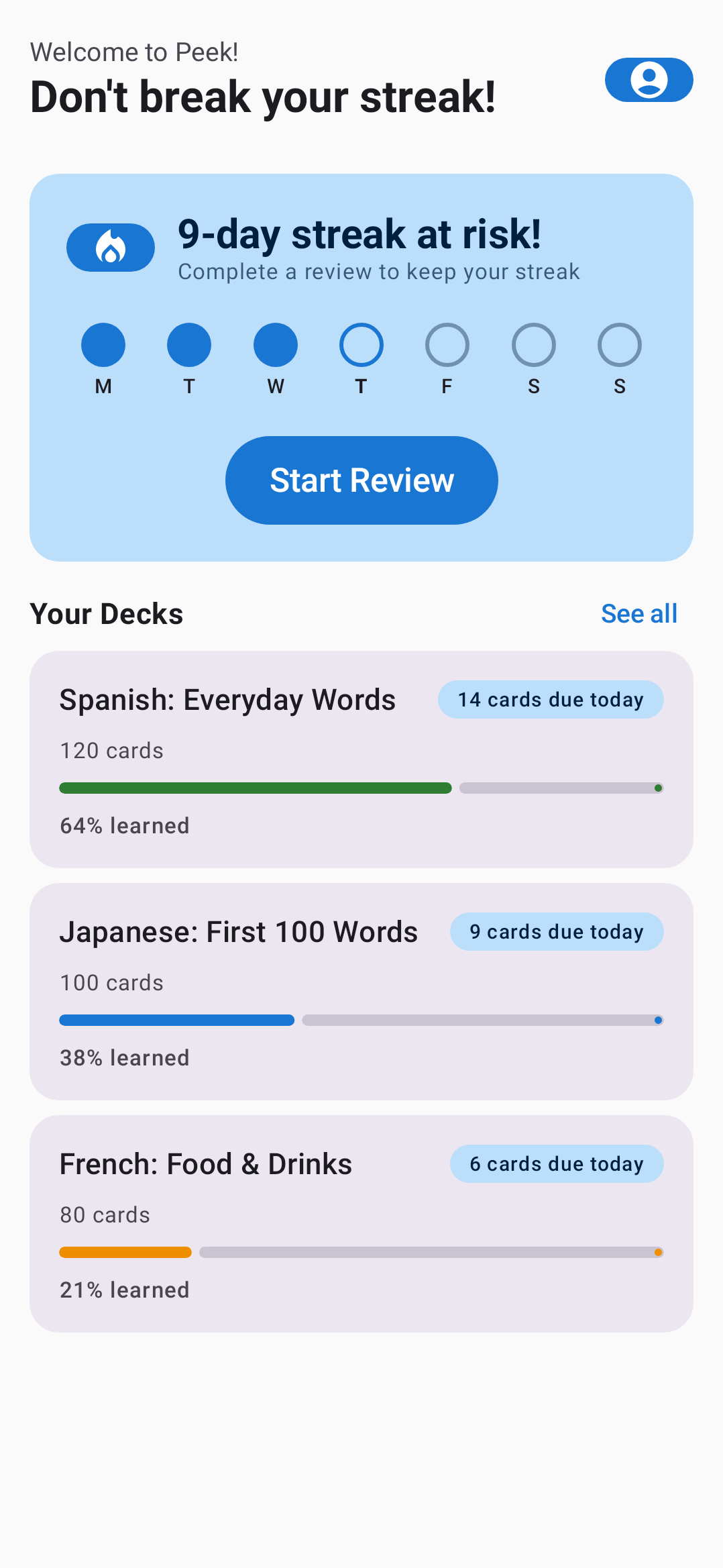
See which Korean cards are due today.
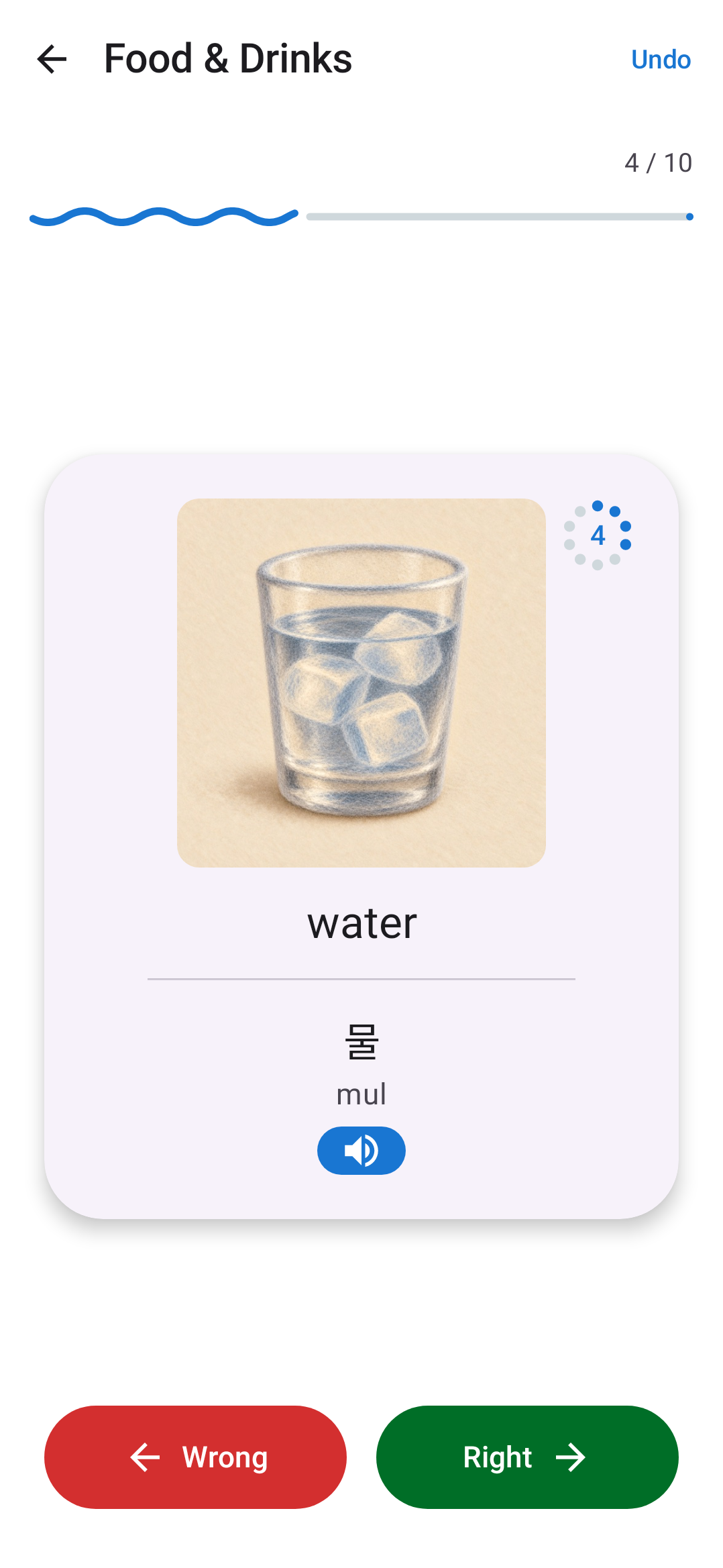
A picture, Hangul, romanization and how it sounds.
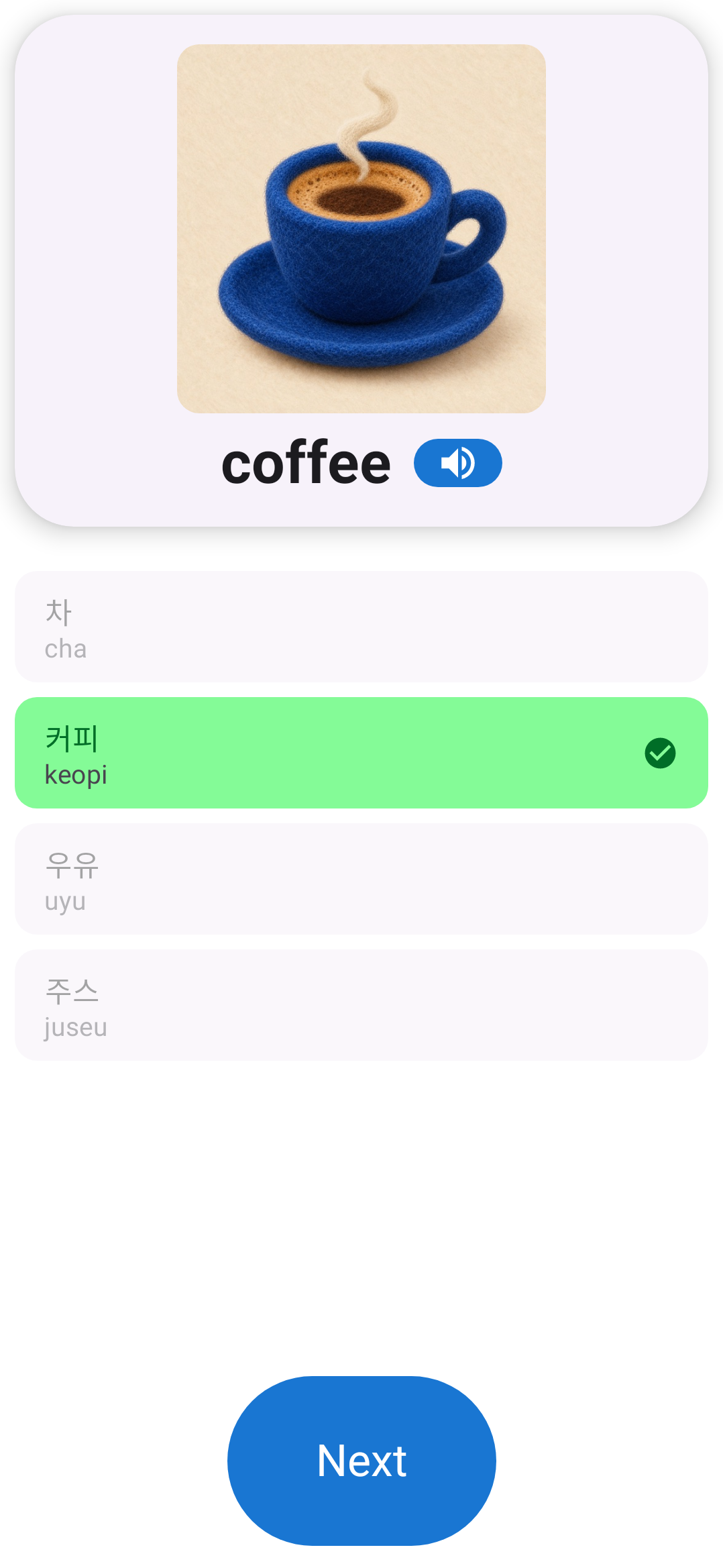
Pick the answer, type it in Hangul, or just recall.
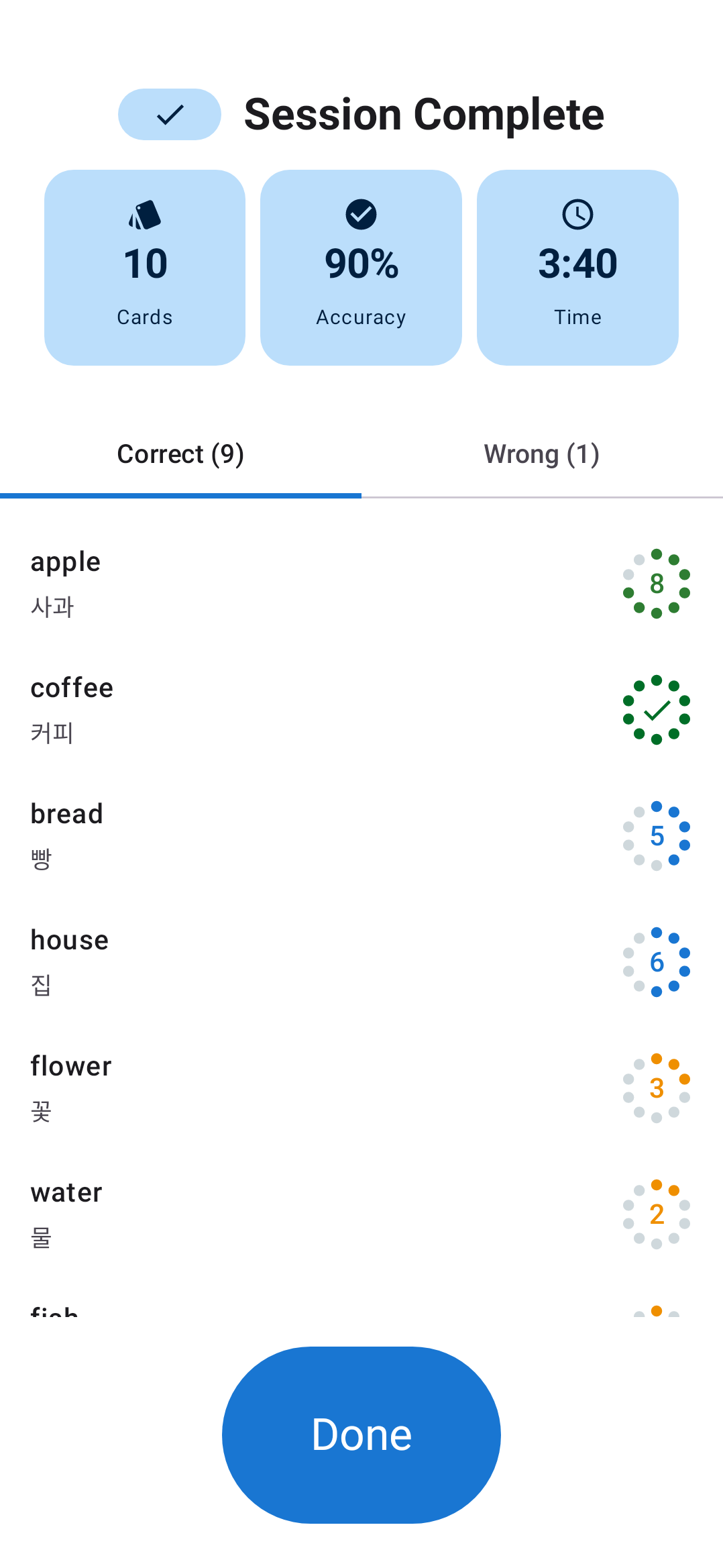
See how the session went, word by word.
A fair comparison for learning Korean: what you get from the first day.
| Feature |  Peek | Anki | Quizlet |
|---|---|---|---|
| Hangul deck built in | ✓ | Shared decks | User sets |
| Everyday Korean words by topic | ✓ | Shared decks | User sets |
| Romanization on every word | ✓ | Depends on deck | Depends on set |
| Both number systems, labeled | ✓ | Depends on deck | Depends on set |
| Picture on every card | ✓ | Depends on deck | Depends on set |
| Audio on every word | ✓ | Depends on deck | ✓ |
| Spaced repetition (SRS) | ✓ | ✓ | Limited |
Honest note: you can find TOPIK vocabulary decks for Anki, and Quizlet has many more user sets. Peek has no grammar decks yet. It sticks to Hangul and everyday words, ready from the first card.
Tap a question, Peek answers.
We'd suggest it, but you don't have to. Words come with romanization, so you can start with them right away.
Korean uses both in everyday life, so both are in the deck, labeled Sino-Korean and Native Korean.
It helps with one part. TOPIK goes well beyond vocabulary, and the decks cover the everyday words.
Yes. Hangul, all the topic decks and cloud sync are free on Android.
No. Pick Korean and begin with the alphabet. An account is only for moving your progress between devices.
Do I need to learn Hangul first?

We'd suggest it, but you don't have to. Words come with romanization, so you can start with them right away.
Why two number systems?
Korean uses both in everyday life, so both are in the deck, labeled Sino-Korean and Native Korean.
Is it enough for TOPIK?
It helps with one part. TOPIK goes well beyond vocabulary, and the decks cover the everyday words.
Is Peek free?
Yes. Hangul, all the topic decks and cloud sync are free on Android.
Do I need to sign up?
No. Pick Korean and begin with the alphabet. An account is only for moving your progress between devices.