a
あ
Hiragana

Every word comes with a picture, its reading and audio.
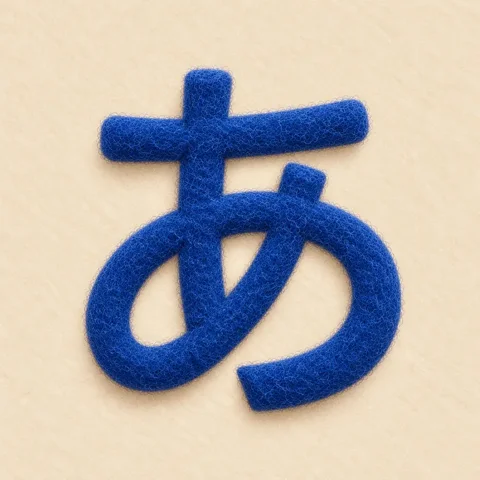
a
あ
Hiragana

water
水
mizu

rice
ご飯
gohan

fish
魚
sakana
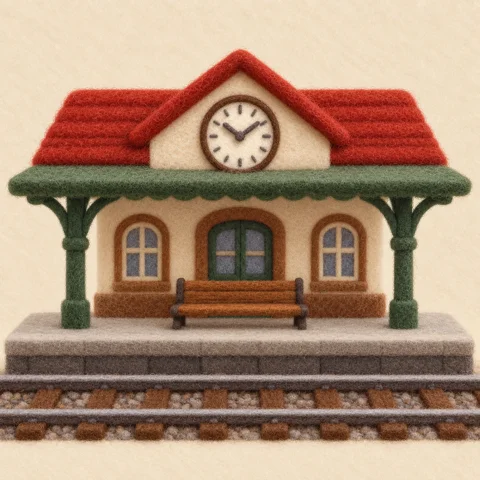
train station
駅
eki
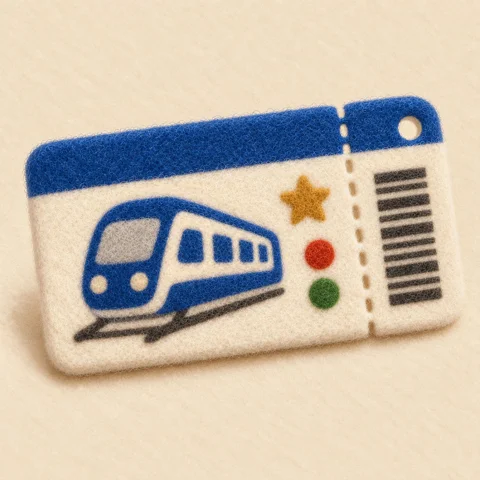
ticket
切符
kippu

flower
花
hana

to eat
食べる
taberu
Japanese has two kana alphabets of 46 basic characters each, and each has its own deck in Peek. Reading starts here: even JLPT N5, the easiest level, expects hiragana, katakana and basic kanji.
Words are written the way they are in Japan, like 駅, with the reading next to them: eki. When you type an answer, the reading only appears afterwards. There are no dedicated kanji decks yet, and Japan's everyday list alone has 2,136 characters.
Pitch can change the meaning: hashi is either "bridge" or "chopsticks". Cards don't mark pitch, so every word has audio to listen to.
The US Foreign Service Institute plans 88 weeks of full-time study for Japanese, 30 for Spanish. Spacing helps: in studies, people recalled 62% after spaced study and 33% after cramming. With 10 new cards a day, you'll see all 400+ in about six weeks.
Want a full plan? Read our guide: How to Learn Vocabulary Fast: A Practical Guide
Sources: JLPT level summary, Agency for Cultural Affairs, Japan, TUFS Language Modules, US Foreign Service Institute, Cepeda et al. 2006.
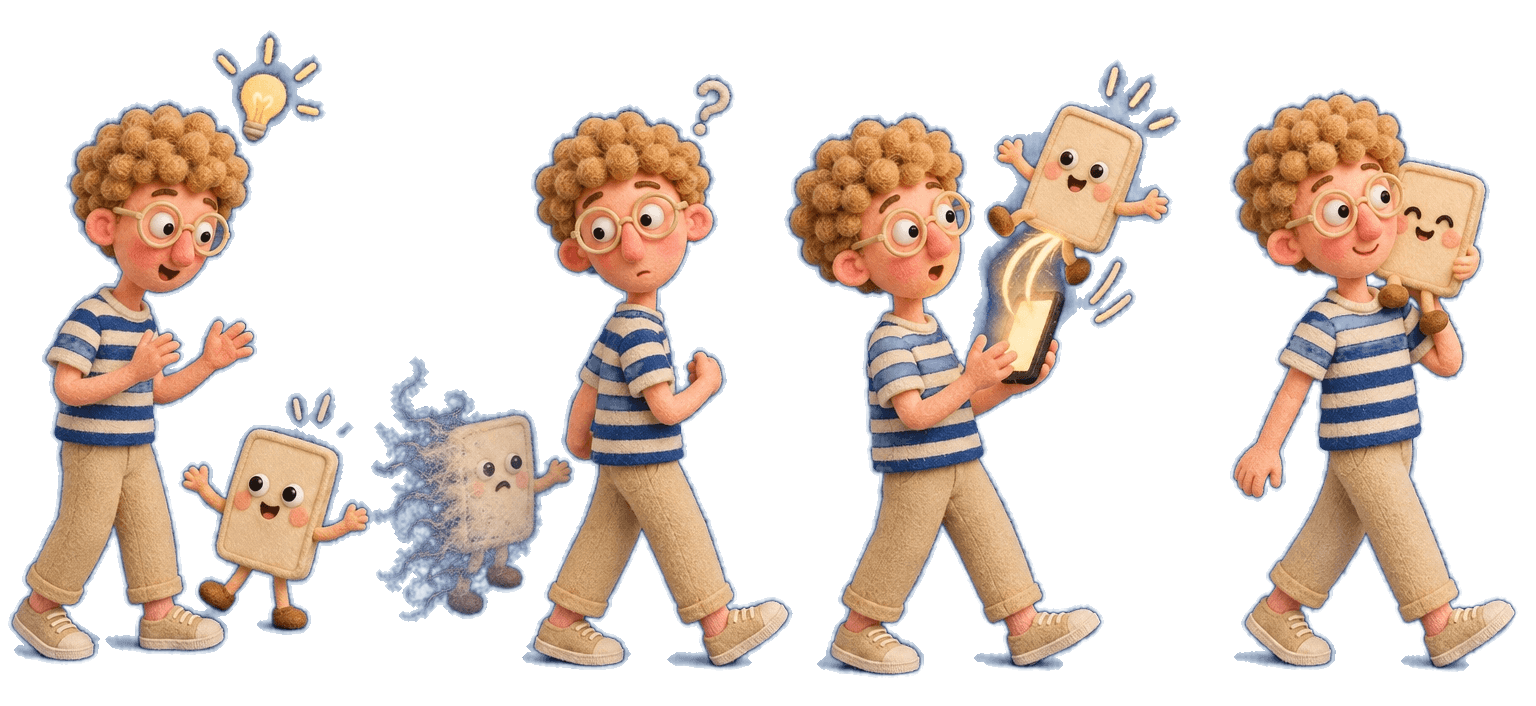
Kana and kanji fade fast unless you see them again at the right moment. Peek does the timing for you.
Learn Today
You meet 駅, the word for a station. It clicks.
Fade Tomorrow
A day later, you remember the picture but not the reading.
Review Tomorrow
Peek brings 駅 back right before it's gone.
Keep A month later
A few reviews later, eki comes to you on its own.

Learn Today
You meet 駅, the word for a station. It clicks.

Fade Tomorrow
A day later, you remember the picture but not the reading.

Review Tomorrow
Peek brings 駅 back right before it's gone.

Keep A month later
A few reviews later, eki comes to you on its own.
Based on the forgetting curve (Ebbinghaus, 1885). Learn more on Wikipedia →

Going to Japan? Station, ticket, food, shopping: the words you'll meet on day one.

Preparing for JLPT N5? The decks give you a base. They're not a full course, so add words from your textbook as your own cards.

Working with Japanese colleagues? Start with the polite phrases in the first deck.
Tap a step to see the screen.
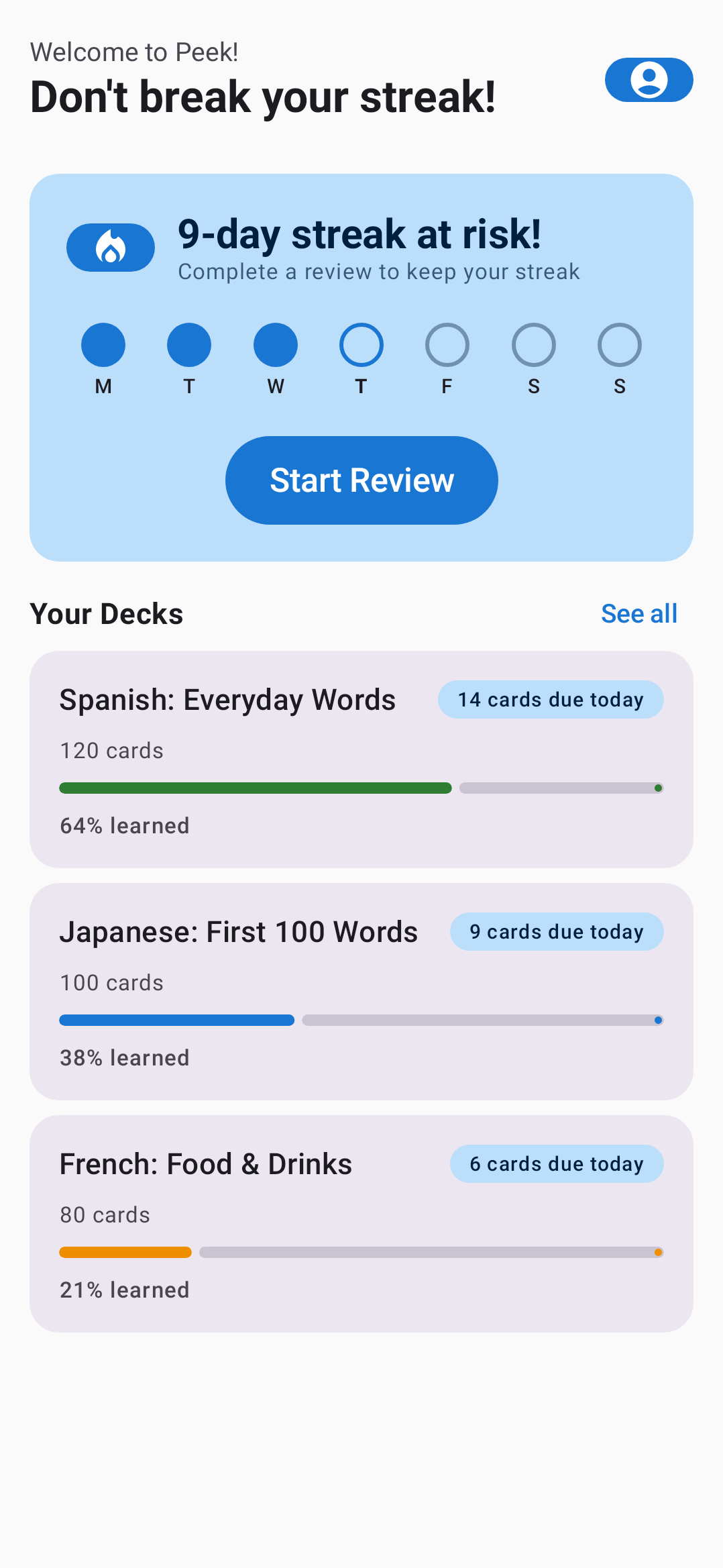
See which Japanese cards are due today.
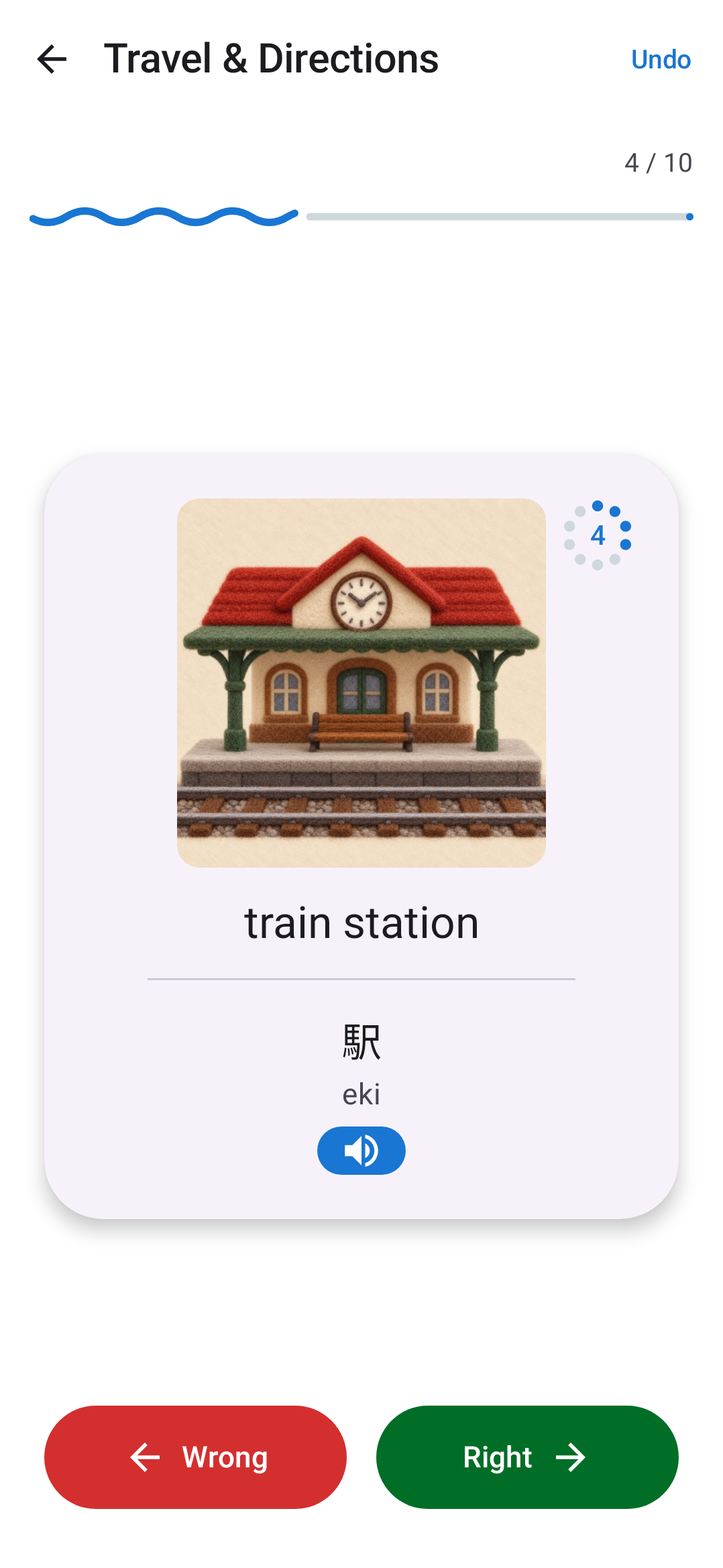
A picture, the word, its reading and how it sounds.
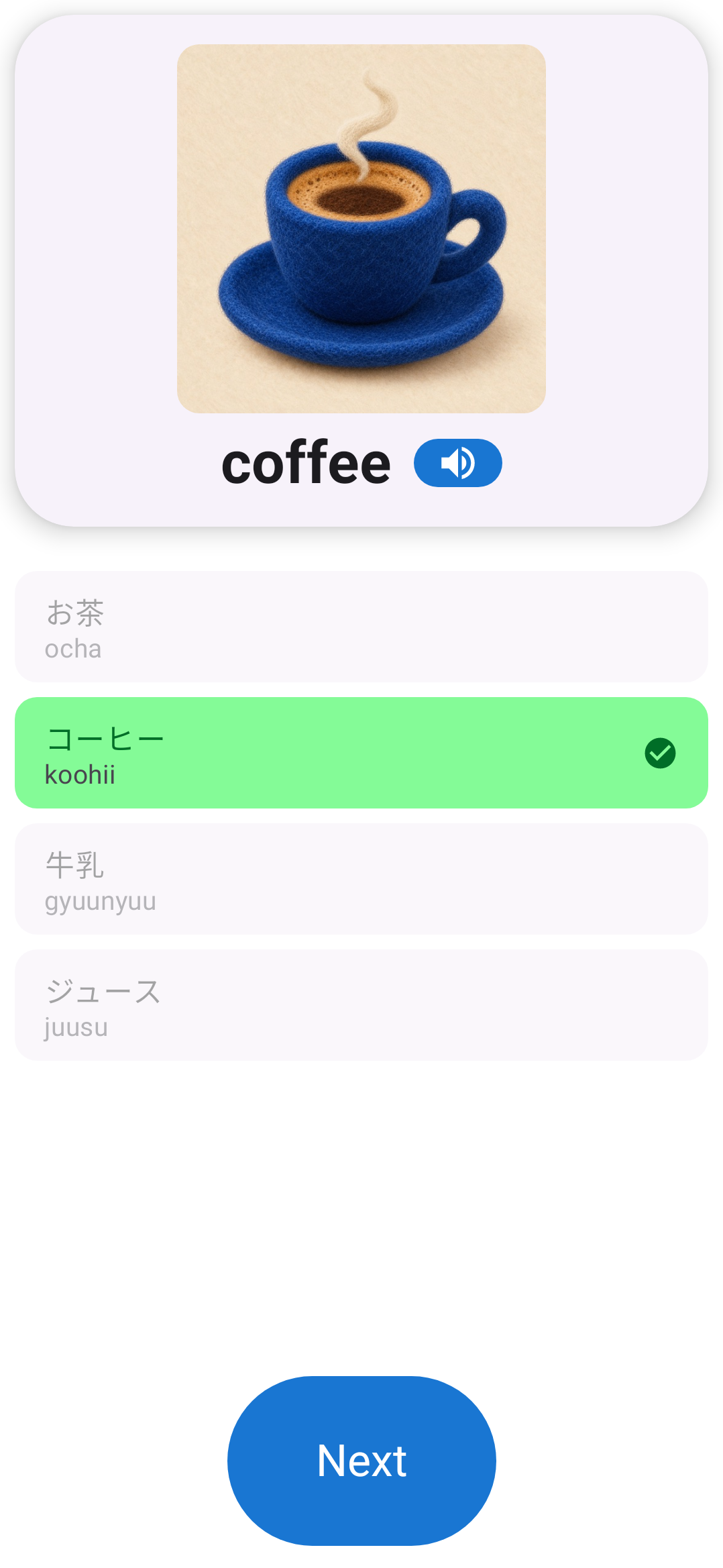
Pick the answer, type it in Japanese, or just recall.
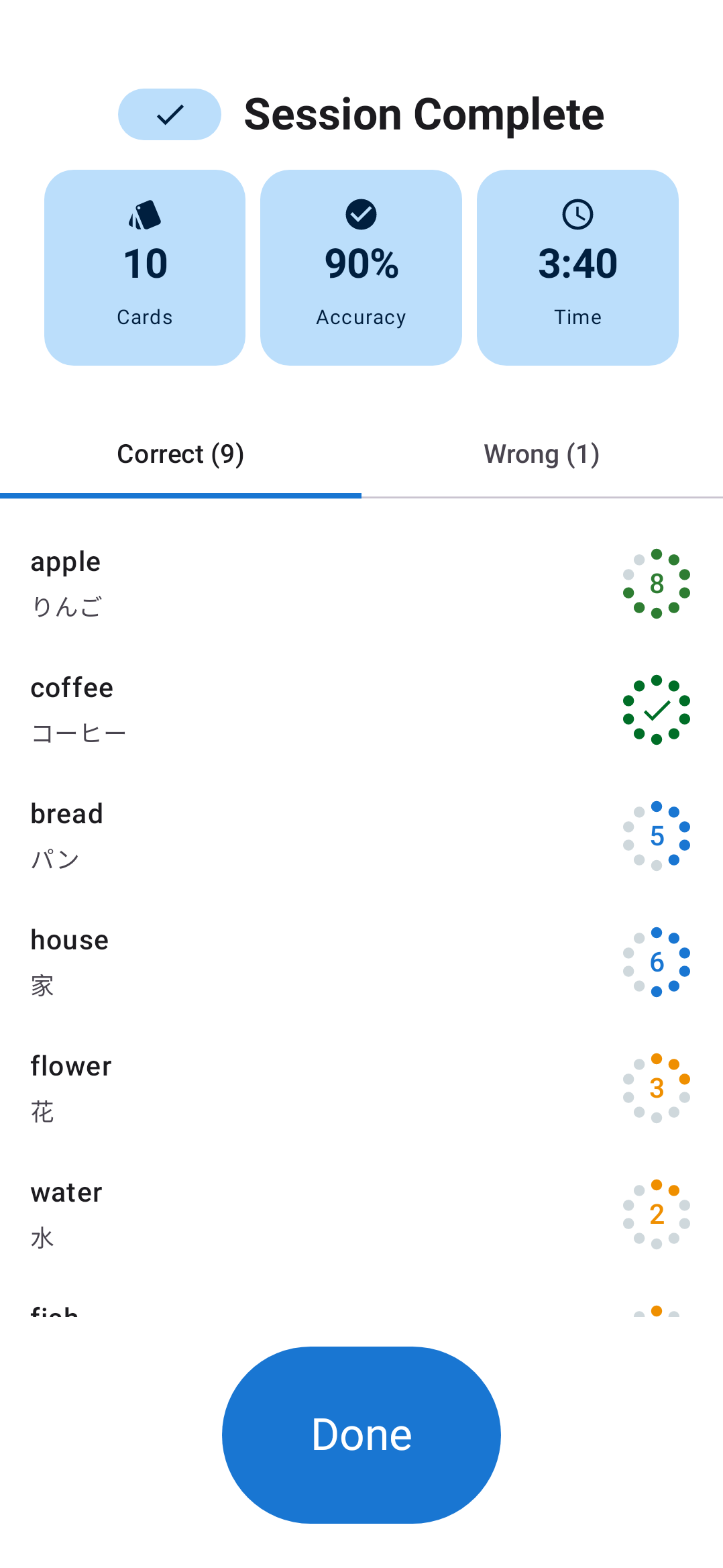
See which words stuck and which come back soon.
A fair comparison for learning Japanese: what you get from the first day.
| Feature |  Peek | Anki | Quizlet |
|---|---|---|---|
| Hiragana and katakana decks built in | ✓ | Shared decks | User sets |
| Everyday Japanese words by topic | ✓ | Shared decks | User sets |
| Romaji on every word | ✓ | Depends on deck | Depends on set |
| Picture on every card | ✓ | Depends on deck | Depends on set |
| Audio on every word | ✓ | Depends on deck | ✓ |
| Spaced repetition (SRS) | ✓ | ✓ | Limited |
| No sign-up required | ✓ | ✓ | ✗ |
Honest note: Anki and Quizlet have much larger shared libraries, Anki has dedicated kanji decks, and it lets you customize almost everything. Peek has no kanji decks yet. It trades that for decks that are ready from the first card.
Tap a question, Peek answers.
We'd suggest it, but you don't have to. Words come with romaji, so you can start with them right away.
Yes. Words are written as usual, in kanji and kana, with the reading next to them. There are no dedicated kanji decks yet.
It helps with one part. The JLPT tests vocabulary, grammar, reading and listening, and the decks cover everyday vocabulary.
Yes. The Android app and all the Japanese decks are free, including cloud sync across devices.
No. Open the app, pick Japanese and start with hiragana. Create an account later if you want to sync across devices.
Do I need to learn kana first?

We'd suggest it, but you don't have to. Words come with romaji, so you can start with them right away.
Does Peek have kanji?
Yes. Words are written as usual, in kanji and kana, with the reading next to them. There are no dedicated kanji decks yet.
Is it enough for the JLPT?
It helps with one part. The JLPT tests vocabulary, grammar, reading and listening, and the decks cover everyday vocabulary.
Is Peek free?
Yes. The Android app and all the Japanese decks are free, including cloud sync across devices.
Do I need to sign up?
No. Open the app, pick Japanese and start with hiragana. Create an account later if you want to sync across devices.